The signs of the Hour (Resurrection day)

English Us

The signs of the Hour (Resurrection day)

7333 1 share 0

In the discourse of the scholars, based on the Qur'an, there is an issue known as 'portents of the Hour' (ashrat al-sa'a) which refers to the signs preceding the Resurrection. These signs are divided into two types: (a) Events which occur before the Resurrection and the collapse of the created order; these events take place when people are still living on earth. The phrase 'portents of the Hour' refers, in the main, to this type of phenomenon. (b) Events which are the cause of the collapse of the created order, most of which are mentioned in the following Suras: al-Takwir (81), al-Infitar (82), al-Inshiqaq (84) and al-Zilzal (99).

In the discourse of the scholars, based on the Qur'an, there is an issue known as 'portents of the Hour' (ashrat al-sa'a) which refers to the signs preceding the Resurrection. These signs are divided into two types: (a) Events which occur before the Resurrection and the collapse of the created order; these events take place when people are still living on earth. The phrase 'portents of the Hour' refers, in the main, to this type of phenomenon. (b) Events which are the cause of the collapse of the created order, 

The signs of the first type can be summarized as follows:
1. The raising up of the last Prophet (Sura Muhammad, 47:18).
2. The breaking up of the barriers, [hitherto restraining] Gog and Magog (Sura al-Kahf, 18: 97-99).
3. The covering over of the sky by thick smoke (Sura al-Dukhan,44:10-16).
4. The descent of the Messiah (Sura al-Zukhruf, 43:57-61).
5. The emergence of a beast from the belly of the earth (Sura al¬Naml, 27:82).
Explanation of these signs can be found in books of exegesis and Hadith.

As regards the signs of the second type, the Qur'an speaks in detail of the transformation of the existential conditions of the universe. The collapse of the sun, the moon, the oceans, the mountains, the earth and the sky; in sum, the existing order will be rolled up as a scroll, and a new order will arise, thus manifesting God's all-encompassing power, as it is said:

The day when the earth is turned into another earth and the heavens [as well], and they are presented before Allah, the One, the All-paramount (Sura Ibrahim, 14:48)
As regards the signs of the second type, the Qur'an speaks in detail of the transformation of the existential conditions of the universe. The collapse of the sun, the moon, the oceans, the mountains, the earth and the sky; in sum, the existing order will be rolled up as a scroll, and a new order will arise, thus manifesting God's all-encompassing power, as it is said: The day when the earth is turned into another earth and the heavens [as well], and they are presented before Allah, the One, the All-paramount (Sura Ibrahim, 14:48)
The blowing of the trumpet

The Holy Qur'an describes an event named 'the blowing of the trumpet', which will occur twice: (a) the first blast of the trumpet causes the death of all living creatures in the heavens and the earth (except those for whom God wills otherwise); (b) the second blast will revive the dead and bring them all before God, [1] as it is said:

And the Horn will be blown, and whoever is in the heavens and whoever is on the earth will fall dead except whom Allah wills. Then it will be blown again, and at once they will be standing, looking on. (Sura al-Zumar, 39: 68)

The Qur'an specifically says in regard to the gathering and the resurrecting of mankind on the Day of Judgement:

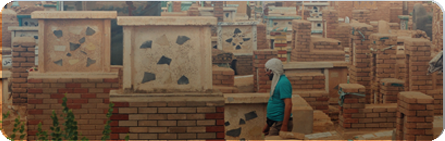
Their eyes humbled, they will emerge from the graves as if they were locusts spreading, (Sura al-Qamar, 54: 7)

1. Therefore the verse: It will not be but one blast, and at once they are all brought present before Us.(Sura Ya Sin, 36:53), is a clarification of the reality of the blowing of the trumpet referred to in verse 51 of the same Sura, And the Horn will be blown; and at once from the graves to their Lord they will hasten. This verse means that the second blast of the trumpet is a 'shout', after which all will suddenly be brought before God.
Related Post

What is Raj'a (the return)?

What is Raj'a (the return)?

In the Arabic language, raj'a means 'return'; in Shi'i terminology it denotes th...

Luxurious Life

Luxurious Life

A life of luxury and lavishness is not desirable in Islam. Islam condemns such l...

Intercession in the Qur'an and Hadith

Intercession in the Qur'an and Hadith

Belief in the intercession of intercessors on the Day of Resurrection with God's...

What s the criterion for superiority?

What s the criterion for superiority?

No person has superiority or preference over others, except by virtue of a great...

The responsibilities of the Imam (successor of the prophet)

The responsibilities of the Imam (successor of the...

The Imam and caliph of the Prophet, from the point of view of the Muslims, is on...

What is the function of faith in the Hereafter in our lives?

What is the function of faith in the Hereafter in ...

faith in the Day of Judgment, a day in which all men will be resurrected and pre...

The Qur'an and the Aims of Prophethood

The Qur'an and the Aims of Prophethood

In this article we aim to address the necessity of prophecy by focusing upon its...

Comments

Please share your comments with us.

0 Comments

Blog Categories

IslamPlus Events Article Ahlulbayt View